

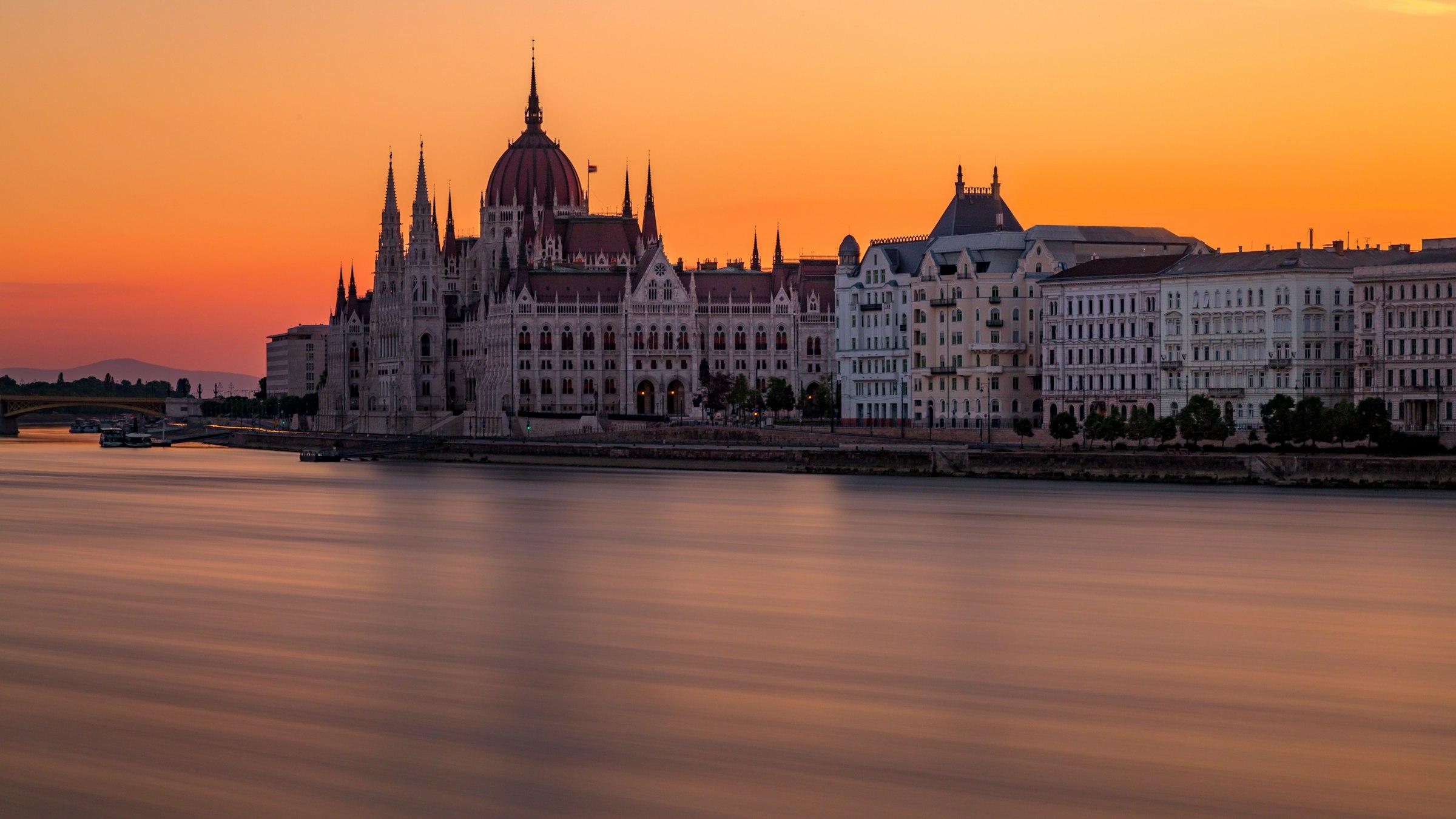
🇭🇺Budapest for Digital Nomads
Hungary · Grand & affordable
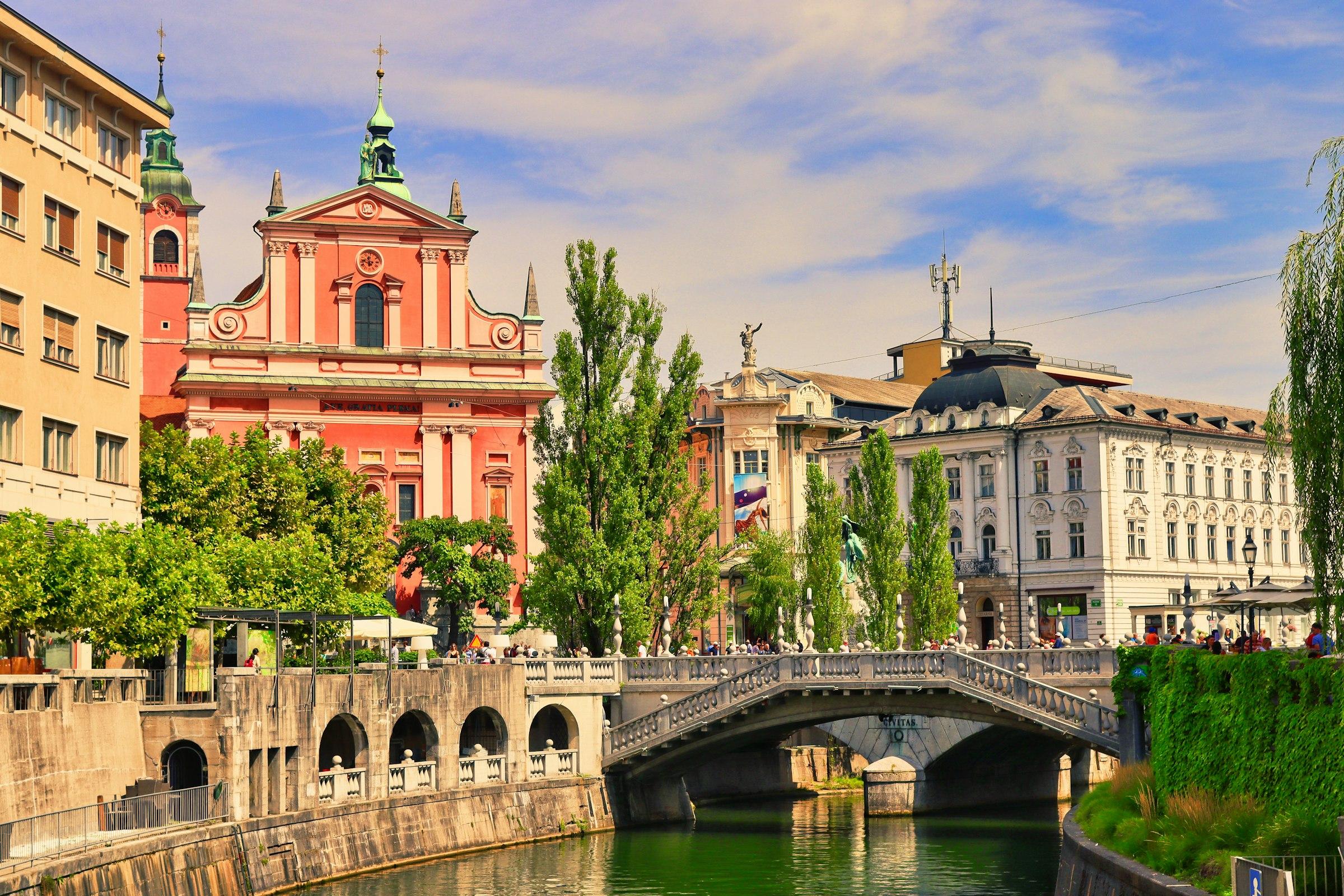
Photo: Seth Fogelman / Unsplash
Costs
from €877/mo
Wifi
46Mbps
Mild months
4of 12
Safety
8.3
Overall
6.7
Budapest at a glance
Budapest is the low-friction European base: a capital with real depth — 30 coworking spaces and 985 cafés mapped within 15 km4 (source: OpenStreetMap — July 2026) — a 46.3 Mbps median download5 (source: M-Lab — median of speed tests, 7-day window, July 2026), and full overlap with the Central European working day. The Danube splits it in two: hilly, residential Buda and flat, dense Pest, where most of the working and social life happens.
The catch is seasonal. Only 4 of 12 months land in the mild band2 (source: Nomadbase comfort index — comfort index from Open-Meteo, 2025): the summer city of terraces, river islands and outdoor pools packs up in late autumn, and what follows is a long grey stretch. Budapest handles it better than most — the thermal baths exist for exactly this, and café life moves indoors without losing much — but you should arrive knowing which of the two cities you booked.
It suits you if you want a real city that works year-round — transit instead of a car, culture instead of beaches, European working hours without visa arithmetic if you hold an EU passport. It suits you less if warmth is the point of leaving home, or if your mood tracks daylight.
What works
- 30 coworking spaces and 985 cafés mapped within 15 km4 (source: OpenStreetMap — July 2026) — depth you can pick a neighbourhood by
- EU citizens stay with nothing to arrange; visa-exempt passports get 90 days in any 180 across Schengen14 (source: Government sources — checked July 2026)
- Measured PM2.5 of 8.5 µg/m³3 (source: OpenAQ — measured, July 2026) — clean air for a capital this size
- 8.6 of every 100 mapped restaurants & cafés flag vegan options4 (source: OpenStreetMap — July 2026) — one of the higher shares in the catalogue
Worth knowing
- A comfort score of 4.3/102 (source: Nomadbase comfort index — comfort index from Open-Meteo, 2025) — this is a winter city for months at a time
- The White Card exists but is a narrow route — its restrictions are covered in the visa section
- The inner party district is loud until morning; a flat there is easy to find and hard to sleep in
- Hungarian is genuinely difficult, and English thins quickly outside the centre
Living in Budapest
Neighbourhoods, finding a place and getting around — the practical layer the data tiles below cannot carry. Working, money, people and time off live in their own sections.
Where to stay
Locals navigate by district number, so learn the map early. Pest is where nomads concentrate; Buda is the deliberate choice for quiet.
- District V (Belváros–Lipótváros) — the polished centre between Parliament and the market hall. Handsome, touristed, and calmer at night than its postcard suggests.
- Districts VI and VII (Terézváros, Erzsébetváros) — café and nightlife country around Andrássy út and the old Jewish Quarter, with the deepest supply of furnished flats. The inner streets of VII run loud until morning — check the courtyard, not just the address.
- District IX (Ferencváros) — renewed block by block behind the market hall: newer interiors, calmer evenings, still central.
- District XIII (Újlipótváros) — riverside and residential, loved by locals, a short tram ride up the Pest bank.
- Buda (Districts I, II, XI) — the green, hilly side: quieter, more family than scene. Pick it on purpose, not by accident.
Finding a place
The furnished mid-term market is deep for a city this size and turns over quickly. The local portals list most of it, usually through agencies; the busy Facebook housing groups are where private lets and shorter terms surface. Expect a serious deposit and insist on a bilingual contract.
Two details matter more than the listing photos. First, which way the flat faces: courtyard flats in the old Pest blocks are dramatically quieter than street-facing ones on the ring roads. Second, how it is heated — a beautiful high-ceilinged flat with ageing gas convectors is a different proposition in January than in June. September tightens everything as the universities return; summer is the easier time to look.
Getting around
This is a transit city, and the network is the point: metro lines, trams and night buses knit both banks together, the big ring tram runs through the night, and nowhere central feels far from anywhere else. A car is a liability here — parking is scarce and the network beats it door to door for most of the day. The Pest side is flat and increasingly cycled, and the bike-share covers one-way hops well.
The culture to learn is the ticket. Singles are validated once — at the punch machine on board or the gate at the metro — and the inspectors with armbands who check them are not a myth. For anything beyond a few days a pass removes the whole question, and the BudapestGO app sells and displays everything. The direct airport bus into the centre settles the arrival without a taxi negotiation.
Cost of living
#49of 101 destinations
€877–€1,301/mo
a coliving room to a place of your own, plus everyday spending
What a month actually costs, as a range — housing you can verify, everyday spending modelled from national price levels, and every line labelled with which it is.
Money
The currency is the forint, and some tourist-facing terminals will offer to charge you in euros — always pay in forint; the offered rate is never your friend. Card acceptance is near-universal, down to market stalls and bakery counters.
The ATM trap is the bright-blue standalone machines on the tourist streets: they surcharge and push a poor conversion rate. Use machines attached to banks and decline the conversion. In restaurants, read the bill before tipping — a service charge is often already added, and tipping on top of it is a donation, not a custom.
- Housing — coliving room to own place, short-let market
- €431 – €687
- Food, groceries and eating outmodelled
- €269 – €381
- Local transport
- €25
- Leisuremodelled
- €135 – €190
- Mobile data
- €18
- Coworking deskadd-on, not in the range
- €155/mo9 (source: Published prices — KAPTÁR, Loffice & Impact Hub Budapest hot-desk rates (median), KAPTÁR FLEXIE (every workday) €155 +VAT is the median; Impact Hub Unlimited 55,000 HUF +VAT (69,850 gross, budapest.impacthub.net/memberships), Loffice LoFlex 20-day 65,000 HUF +VAT (loffice.hu/budapest/en/coworking), checked 2026-07-29)
- Short-let market, whole flat
- €1,414/mo7 (source: Inside Airbnb — market price (median of 142 monthly entire-home listings), Q2/2026)
- whole-home short-let listings, not a nomad's room
Spot prices: coliving room €431/mo9 (source: Published prices — Budapest Coliving, cheapest published room (Sobieski utca), published rent €365/month + €66 utilities; listed rooms run €365–420 + €65–70 utilities; operator-managed shared flats, student/young-professional oriented, checked 2026-07-29) · 3-star hotel €82.91/night9 (source: Published prices — median of 3 listed 3-star rates (Booking.com), night of 17 Aug 2026 (30,040 HUF), ibis Budapest Stadium HUF 30,040, Ibis Budapest Centrum HUF 30,305, Medos Hotel HUF 29,280; double room incl. taxes, checked 2026-07-29) · ride-hailing ~5 km €10.76/ride9 (source: Published prices — official fixed Budapest taxi tariff from 1 Aug 2026, 5 km (3,900 HUF), 1,300 HUF flagfall + 520 HUF/km + 130 HUF/min (Metropolitan Assembly decree, adopted Jun 2026); until 31 Jul 2026 still 1,100 + 440/km = 3,300; +800 HUF airport or app/phone pre-booking surcharge, checked 2026-08-01) · café latte €4.259 (source: Published prices — Starbucks (Gozsdu), Caffè Latte, Wolt delivery menu (1,540 HUF), delivery-menu price; verified via Wolt venue assortment (price 154000 minor units = 1,540 HUF), checked 2026-07-29) · Big Mac €4.609 (source: Published prices — The Economist Big Mac Index, national average (1,660 HUF = 5.30 USD), July 2026 release — data CC BY 4.0)
Work
#27of 103 destinations
46Mbps
median download, measured in the city
Connection, desks and whether a day here meets yours — the three things that decide whether you can do your job from this city.
Working from here
The coworking market is broad enough to choose by neighbourhood rather than by compromise, with clusters in Districts VI, VII and IX, and day passes and flexible plans are standard. The café culture does the rest: Budapest's coffeehouse tradition is old, and the specialty wave landed on top of it rather than replacing it. The practical split — the gilded historic rooms are for visiting, the third-wave places are for working, and the latter treat laptops as furniture. Wifi is the rule; power sockets are the thing to scout.
Internet
Coliving & coworking
CoworkingClick the map to open it — 53 places mapped in Budapest altogether.
- Coworking spaces mapped
- 304 (source: OpenStreetMap — within 15km)
- Cafés mapped
- 9854 (source: OpenStreetMap — within 15km)
Time zones
- Workday overlap with Europe
- 8 of 8 h1 (source: Copernicus ERA5 — Nomadbase overlap of a 09:00-17:00 day against Open-Meteo time zone (Europe/Budapest), standard time; Europe reference UTC+1)
- 0 h8 h
- Workday overlap with US East
- 2 of 8 h1 (source: Copernicus ERA5 — Nomadbase overlap of a 09:00-17:00 day against Open-Meteo time zone (Europe/Budapest), standard time; US East reference UTC-5)
- 0 h8 h
Overlap is the hours a 09:00–17:00 day here meets a 09:00–17:00 day there, at standard time.
Climate & air
#47of 103 destinations
4of 12
mild months — felt temperature between 18 and 27 °C
Month by month, not as one annual average. 18–27 °C is the range where being outside feels good — we count how much of the year sits inside it.
Seasons
Budapest is two cities on one river, and the intro already introduced them: the terrace-and-river-island summer city, and the long grey winter one. What the winter city has that most of Central Europe lacks is an infrastructure of warmth — the thermal baths are not a tourist activity here but a season-management strategy, and café culture simply moves indoors and thickens.
August can run genuinely hot, and the shoulder months — May, June, September — are the city at full charm with the summer crowds at half strength. If the grey months worry you, the baths plus a January escape flight is the local formula.
Tap a month for details.
feels-like monthly mean · ticks = rain days1 (source: Copernicus ERA5 — 2025 monthly means (felt temperature, rain-day share, cloud share))
comfortable & clearcomfortable, wetter/greyeroutside the 18–27 °C band
- Air quality — PM2.5, recent median
- 8.5 µg/m³ · fair3 (source: OpenAQ — median of 6 stations, 2026-07-27)
- 0WHO 525+
- Dry days a year
- 271 days/year1 (source: Copernicus ERA5 — 2025 full-year count)
- Cloud cover, annual mean
- 55%1 (source: Copernicus ERA5 — 2025 annual average)
The climate score is built from that band plus rain and cloud cover, month by month — so a hot summer costs a destination points rather than earning them.
Safety & everyday life
#15of 103 destinations
8.3/ 10
women's safety — Georgetown WPS index, country level
Country-level indicators — a practical baseline for the whole country, not the vibe of one neighbourhood. Community reports refine this picture over time.
Staying safe
Budapest’s everyday safety is high and its scams are traditional: the tourist-bar bill with invented prices, the taxi that quotes creatively. Both have the same fix — use the ride apps, and drink where menus print numbers. Pickpockets work the crowded trams and the bath changing rooms; use the lockers properly.
The party district is loud but largely good-natured; the standard drink-awareness rules cover it. Beyond that, winter ice on the bridges’ pedestrian paths is the hazard locals actually plan around.
- Homicide rate, national
- 0.7 per 100k8 (source: UNODC — intentional homicide rate for Hungary, 2024)
- Safety for women
- 8.3 / 10
- 010
Georgetown WPS index — inclusion, justice and security, country level
- Getting by in English
- 8.5 / 10
- 010
very high English proficiency
LGBTQ+ legal position · Hungary11 (source: Nomadbase country research — checked 2026-07-29)
7.5 / 10- Same-sex relationshipsLegal
- Partnership recognitionCivil union
- Employment protectionsYes
- Legal gender changeNot possible
7 queer venues mapped in the city · ≈ 0.4 per 100k residents4 (source: OpenStreetMap — within 15km)
March 2025 law bans Pride-type assemblies (fines, facial recognition) and an April 2025 constitutional amendment enshrines two sexes; Budapest Pride 2025 still drew huge crowds in defiance. Older protections (registered partnership, employment anti-discrimination) remain on the books, but the state climate is openly hostile.
Tap water · Hungary11 (source: Nomadbase country research — checked 2026-07-29)
10.0 / 10Unsafe
Bottled advised
Mostly fine
Drink the tap
Safe to drink nationwide
Budapest Waterworks supplies 2 million people with potable tap water daily; drinkable throughout the country.
Getting there & staying
#34of 103 destinations
no limit
visa-free on an EU passport · set in Your setup
How you get in, how long you may stay, and what it takes to run a business from here.
Visa & entry requirements
Digital nomad visa
White Card14 (source: Government sources — Dedicated remote-work visa: White Card (checked 2026-07-29))
EU citizens can stay indefinitely; visa-exempt non-EU travellers get 90 days in any 180 across the Schengen area. The White Card is a dedicated digital nomad permit — €3,000 net a month, no Hungarian income, one year plus one extension — and a deliberate dead end: it leads to neither permanent residence nor family reunification.14 (source: Government sources — checked against the official source on July 29, 2026)
How long you can stay
- EU, EEA and Swiss citizens: no limit. You may need to register locally after a few months.
- Visa-exempt non-EU travellers (US, UK, Canada, Australia and others): 90 days within any 180-day period. That allowance is shared across the whole Schengen area, not per country — days spent in Berlin count against days in Lisbon.
- Everyone else needs a Schengen visa before travelling.
Since 10 April 2026 the EU Entry/Exit System (EES) records every crossing biometrically at all air, land and sea borders, so the 90/180 count is now tracked automatically rather than by passport stamp.
Staying longer as a remote worker
Hungary's White Card (introduced 2022) survived the 2024 immigration-law overhaul intact. It is for third-country nationals who either work remotely for an employer outside Hungary or own a share in a profitable company outside Hungary — pure freelancers invoicing scattered clients with no company behind them fit the definition poorly.
- Income: at least €3,000 net per month, shown for the six months before applying and maintained throughout the stay (bank statements or employer/tax-authority certificates). The threshold is a flat figure fixed in the immigration rules — €2,000 at launch, €3,000 since the 2024 overhaul (Act XC of 2023).
- No Hungarian income: no Hungarian employer, no gainful activity in Hungary, no shares in a Hungarian company.
- Validity: one year, extendable once for another year. Two years is a hard ceiling — the same purpose cannot be extended twice.
Know what it is not. Time on a White Card does not count toward a permanent residence card, and family members are explicitly excluded from residence permits for family reunification. Fine for a year or two in Budapest; the wrong tool for settling. Apply through the Enter Hungary portal, or at a Hungarian consulate abroad.
Visa rules change frequently. This information was last checked on July 29, 2026. It is not legal advice — confirm before booking with the official source.
Flights
The nearest major airport — Budapest Liszt Ferenc International Airport — is 18 km6 (source: OurAirports — nearest major airport is Budapest Liszt Ferenc International Airport) out, with 2 airports6 (source: OurAirports — major and regional airports with scheduled service) within 100 km overall.
Company & banking
- Setting up a company
- 5.0 / 10
- 010
on-site · 100% foreign ownership · capital from EUR 7,500 · ~7 days to register
- Opening an account
- 8.0 / 10
- 010
personal account straightforward · business account straightforward · branch visit needed · Wise + Revolut
Setting up, in practice
A Kft. needs 3,000,000 HUF of capital and must be filed by a Hungarian attorney — the lawyer is not optional, which is the main cost surprise.Banking, in practice
Company accounts follow registration without much friction; the attorney usually arranges the introduction.Not legal or tax advice. Company law, fees and bank policy change without notice — confirm with the registry linked on each figure and with a local adviser before you act on any of it.
Going out
#1of 103 destinations
36/ 100
bars, pubs and clubs per 100 restaurants & cafés
Evenings, eating and what there is to do once the laptop closes.
Time off
Szentendre is the short hop: a riverside artists' town at the end of the suburban railway. The Danube Bend behind it — the citadel at Visegrád, the basilica at Esztergom — fills a proper day. Lake Balaton is the summer institution and reachable by train, and the wine towns of Eger and Tokaj make unhurried weekends. And because this is Central Europe, Vienna and Bratislava are ordinary train rides away — a different capital for lunch is a genuine option.
CafésClick the map to open it — 53 places mapped in Budapest altogether.
Being active
#8of 103 destinations
337spots
gyms and yoga studios mapped in town
Gyms, studios and board sports in town, and the nature within reach — counted where counting is honest, shown as a badge where the map is too sparse to rank.
Staying active
Margaret Island is the city’s track: a car-free island with a rubberised running loop around its rim, pools in its middle, and the river on both sides — it is hard to design a better training venue on purpose. The Buda hills add real trail gradient a tram ride away.
The baths double as recovery culture, which changes how training feels here: hard efforts earn a thermal soak by right. Gyms and studios are plentiful and fairly priced, and rowing or kayaking on the Danube arm is the summer specialty worth trying once.
In town
GymsYogaClick the map to open it — 53 places mapped in Budapest altogether.
Nature within reach
Community
1here now
members checked in right now
Who is here, who is coming, and who has been. Counts only — never names.
Meeting people
The community here is year-round rather than seasonal, which changes its texture: people have flats, routines and a favourite bath, and they do not all leave in the same month. Coworking events, language exchanges and the expat sports leagues are the easy doors in; Margaret Island collects the runners. The thermal baths are the social institution — going regularly is how this city does slow socialising. Nobody expects you to master Hungarian, but a handful of courtesies opens more than it should.
here now
arriving soon
have been
See who they are, message them and join local meetups in the Nomadbase app.
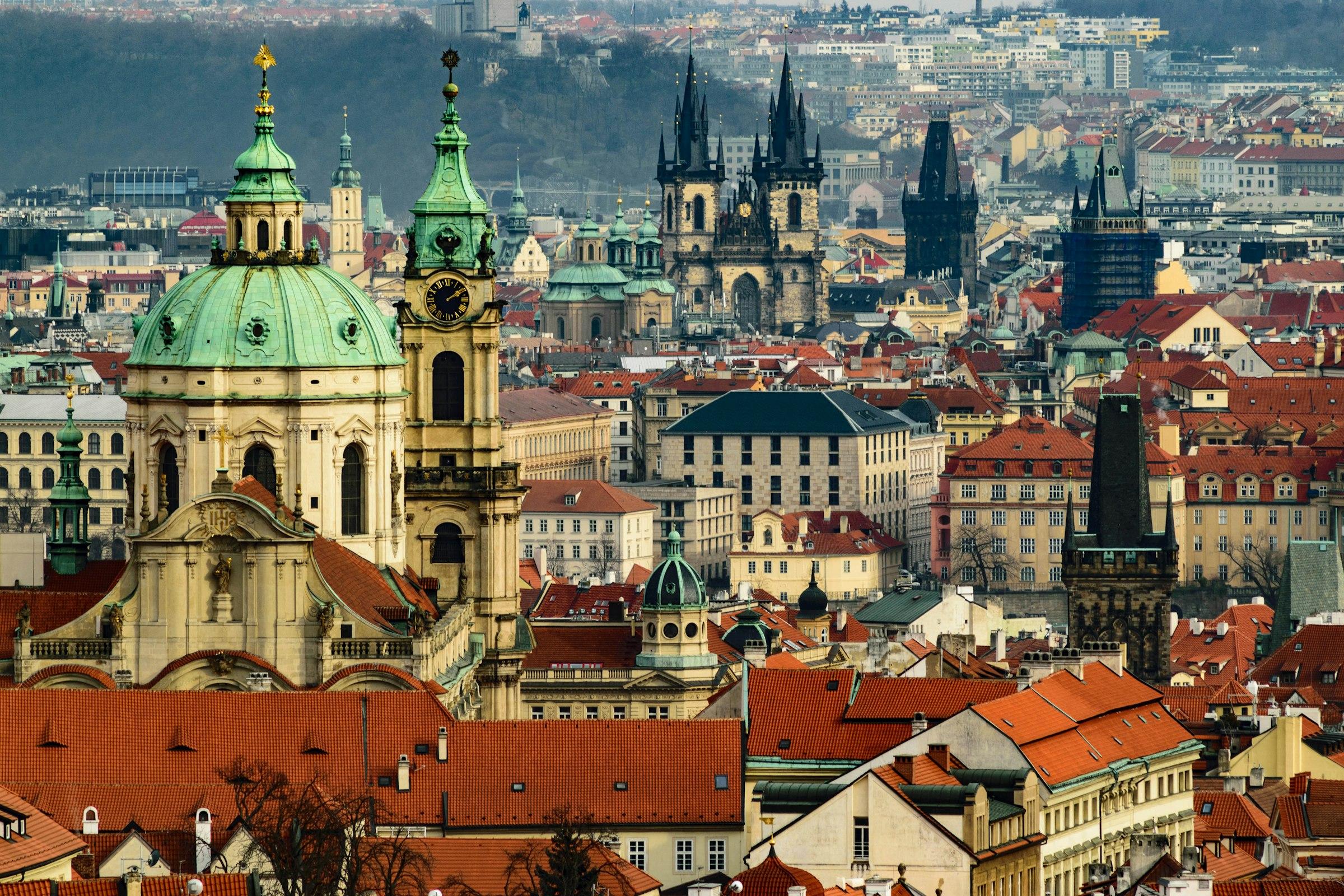
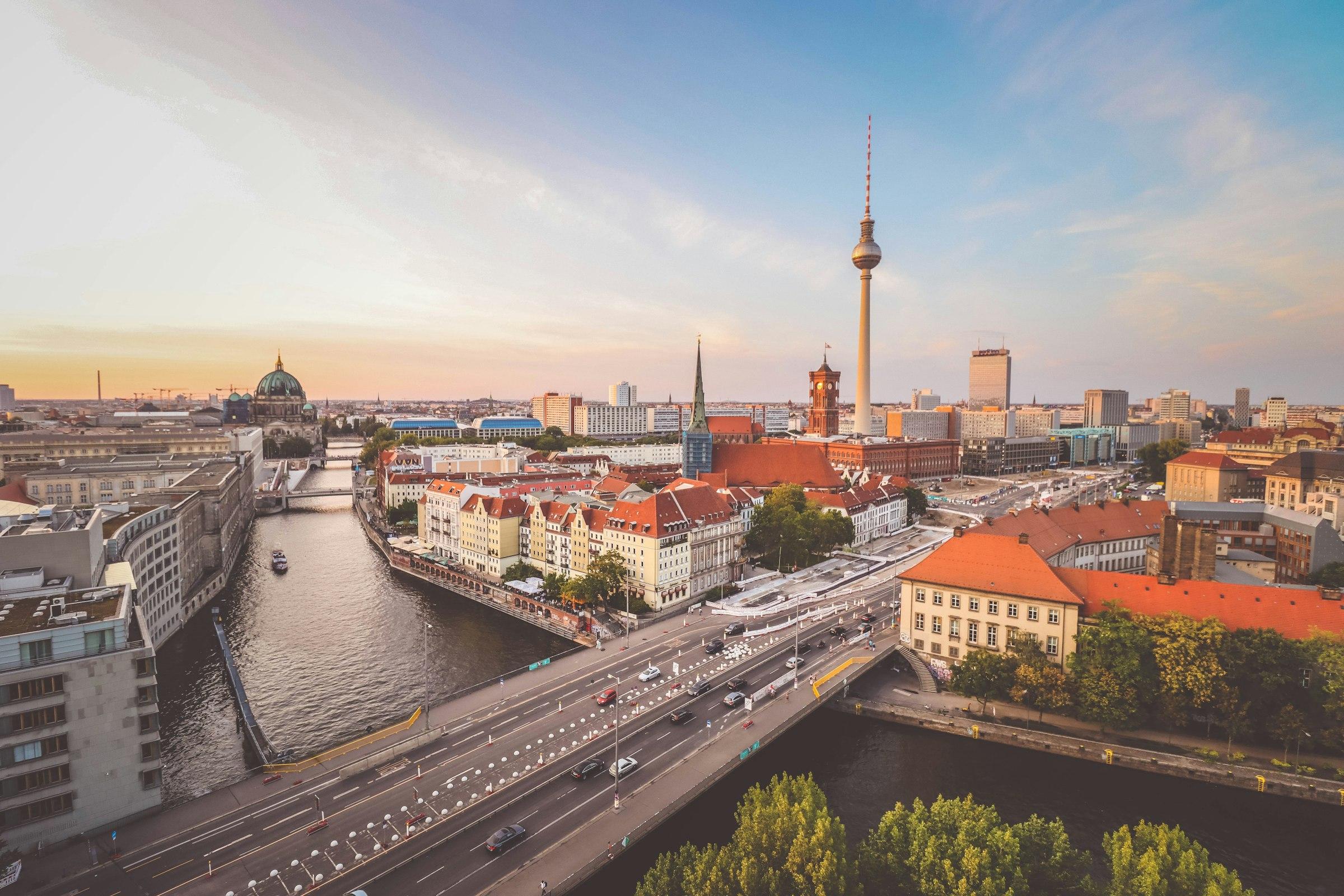
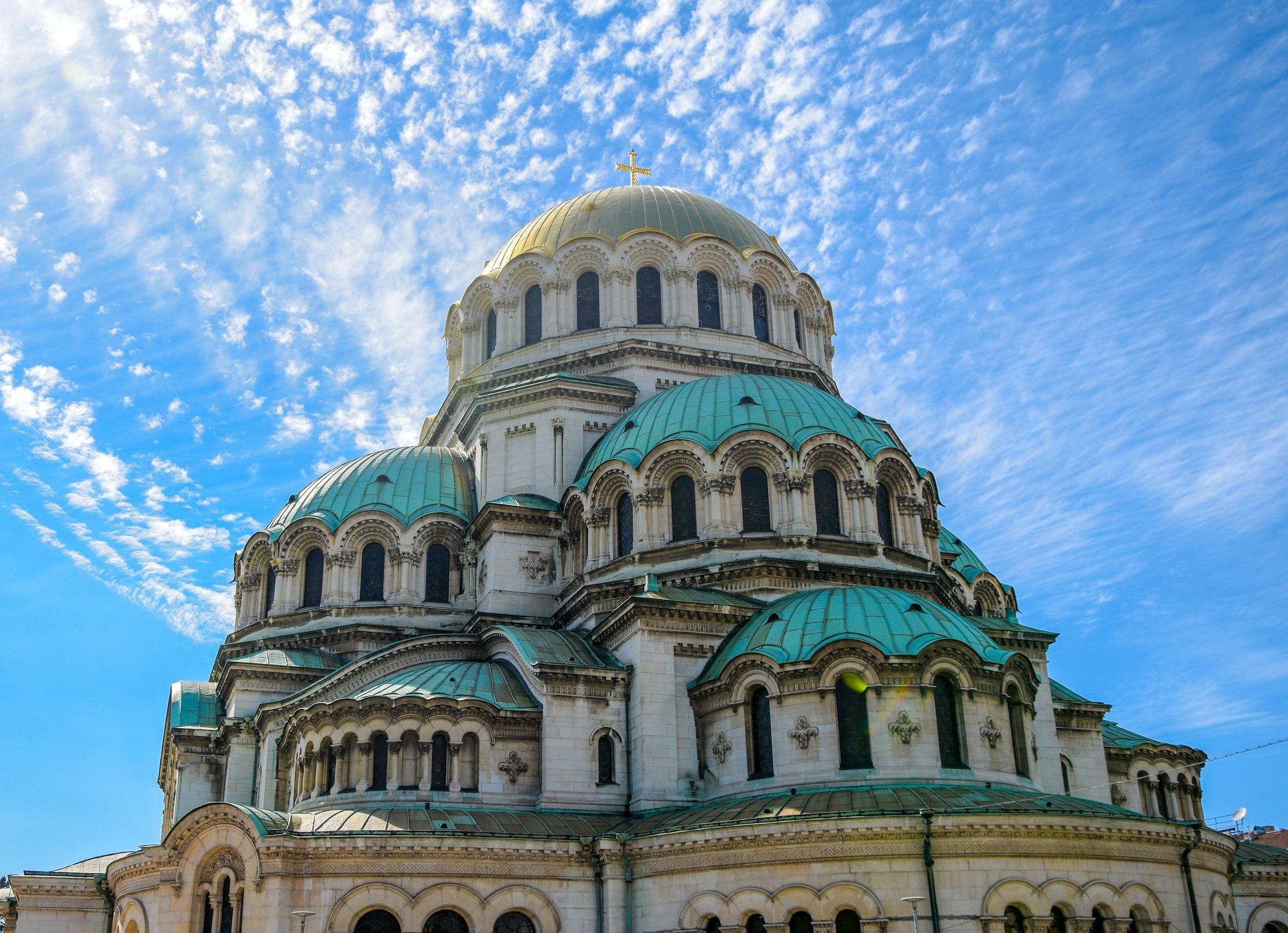
Places like Budapest
The closest matches in the catalogue, measured across cost, climate, connection and safety — with the reason each one is here. Compare any of them against this page in one click.
How the scores work
Every score runs 0–10 and is comparative — where Budapest lands across the catalogue, not a grade in isolation.
Cost
5.2#49 of 101 · 1 of 1 measured
What a month costs, from the cheapest way of living here to the dearest we can price.
A month runs €877–€1,301 and everyday spending is modelled from national price levels. Across the catalogue that ranks 49th of 101.
Public data 5.2
Work
6.4#27 of 103 · 2 of 2 measured
Connection, desks and whether the working day here meets yours.
Typical downloads run around 46 Mbps and 30 coworking spaces are mapped in town. Across the catalogue that ranks 27th of 103.
Public data 5.7
Public data 7.1
Climate
6.6#47 of 103 · 1 of 1 measured
How the year feels outside, air quality included.
4 of the 12 months sit in the comfortable 18–27 °C range and the air is clean (8.5 µg/m³ PM2.5). Across the catalogue that ranks 47th of 103.
Public data 6.6
Safety
7.8#15 of 103 · 6 of 6 measured
The country-level baseline: violence, healthcare, water, and who the law protects.
Violent crime is rare nationwide (0.7 homicides per 100k), women's safety scores 8.3/10 on the Georgetown index, 211 clinics and hospitals are mapped within reach and tap water is drinkable. Across the catalogue that ranks 15th of 103.
Public data 8.3
Public data 5.3
Public data 8.3
Public data 10.0
Public data 7.5
Public data 8.5
Getting there
6.7#34 of 103 · 3 of 3 measured
Getting in, staying legally, and flying out again.
An EU passport can stay without a time limit, there is a dedicated nomad visa and the nearest major airport is 18 km from town. Across the catalogue that ranks 34th of 103.
Public data 8.7
Public data 4.0
Public data 6.5
Going out
9.5#1 of 103 · 4 of 4 measured
Evenings, eating and what there is to do when the laptop closes.
For every 100 restaurants and cafés there are 36 bars, pubs or clubs and 9 vegan-friendly places per 100 restaurants and cafés. Across the catalogue that ranks 1st of 103.
Public data 9.3
Public data 9.7
Public data 9.8
Public data 9.4
Being active
7.5#8 of 103 · 2 of 2 measured
Gyms and studios, board sports, and the nature within reach.
291 gyms and 46 yoga studios are mapped in town and 203 nature reserves and 483 hiking routes lie within 30 km. Across the catalogue that ranks 8th of 103.
Public data 8.5
Public data 6.6
Community
5.7#5 of 23 · 1 of 1 measured
Members on the ground, chapters and events — our own data, not a proxy.
1 member is in Budapest right now. Across the catalogue that ranks 5th of 23.
Public data 5.7
Sources
Every figure on this page carries the source it came from and the date it was measured. Where no source exists, the field is left empty rather than estimated.
- 1
Copernicus ERA5Generated using Copernicus Climate Change Service information
ECMWF’s ERA5 reanalysis, retrieved through Open-Meteo. Temperatures, rainfall, cloud cover and wind are daily values for the last complete calendar year.
- 2
Our own reading of ERA5 data, not a measurement: a month-by-month score for how comfortable the felt temperature is, damped for rain and cloud. The formula is published.
- 3
OpenAQCC BY 4.0
Air quality measured at ground stations. Only reaches part of the catalogue — a city needs a station nearby that is still reporting.
- 4
OpenStreetMapODbL
Community-mapped places: coworking, cafés, gyms and diet options within 15km. Counts are a floor rather than a census — coverage depends on local mappers.
- 5
M-LabCC BY-SA 4.0
Internet speed from real speed tests run by people in the city, aggregated over a seven-day window.
- 6
OurAirportsPublic domain
Airport locations and types. Distances are to the nearest major airport with scheduled service.
- 7
Inside AirbnbCC BY 4.0
The short-let market price: median nightly rate of entire homes bookable by the month, times thirty, converted to EUR at ECB reference rates. Deliberately not called rent — local leases run cheaper, and member reports correct downward.
- 8
UNODCFree with attribution
Intentional homicide rate from the UN Office on Drugs and Crime — a national figure, because no free source measures crime per city. The year next to the number is the year the country last reported.
- 9
Prices read by hand from the operator’s or authority’s own published price list — a transit tariff, a coworking rate card, an eSIM store — on the date shown. Checked quarterly; the linked page is the source.
- 10
World BankCC BY 4.0
Price level of household consumption at market exchange rates (US = 100) — a national figure that anchors the cost score where no city-level source exists yet. It measures what arriving with foreign income feels like, which is why a weak currency lowers it.
- 11
Hand-maintained country tables for the LGBTQ+ legal position and tap-water safety, compiled from advocacy databases (ILGA World, Human Dignity Trust), national authorities and government travel advice, and scored with a published rubric. Country-level by nature — city reality can differ, which is what the practical note is for.
- 12
WikidataCC0
Structural facts taken from the place’s Wikidata entity — resident population, which mirrors a national census figure, and elevation above sea level. The year is the one Wikidata records for that figure; where the entity was the wrong scale for the place we describe, the number has been replaced by a hand-sourced one from the statistics office instead.
- 13
Figures reported in the app by people living there, shown as a median with outliers removed. The only source for costs, because no free public one measures them per city.
- 14
Government sources
Visa and entry rules come from the responsible authority for each country, linked in the visa section and re-checked by hand on the date shown.
Frequently asked questions
How much does it cost to live in Budapest per month?
Between €877 and €1,301 a month, housing and everyday spending together, depending on whether you take a coliving room or your own place. Housing is a coliving room at €431 up to your own place at €687. Everyday spending — food, local transport, leisure — is modelled from national price levels rather than measured in the city, so it is an indication and not a quote. A coworking desk is extra at €155. Every figure carries its source on the destination page.
How fast is the internet in Budapest?
Median download speed is about 46.3 Mbps. Source: M-Lab median of 11,299 tests within 50 km, last 7 days.
What visa do I need for Budapest?
EU citizens can stay indefinitely; visa-exempt non-EU travellers get 90 days in any 180 across the Schengen area. The White Card is a dedicated digital nomad permit — €3,000 net a month, no Hungarian income, one year plus one extension — and a deliberate dead end: it leads to neither permanent residence nor family reunification. Last checked 2026-07-29. Always confirm with the official source before booking.
What is the weather like in Budapest?
Winters average 2.3 °C and summers 22.6 °C. 4 of 12 months average a comfortable 18–27 °C (felt temperature). Source: Copernicus ERA5, 2025 annual average.
Can I work European or US hours from Budapest?
A 09:00–17:00 working day in Budapest overlaps 8 hours with Central European time and 2 hours with US Eastern time, at standard time.
Are there coworking spaces in Budapest?
30 coworking spaces are mapped in Budapest, plus 985 cafés to work from. Source: OpenStreetMap, within 15km. Counts are a floor, not a census — coverage depends on local mappers.
How do you get to Budapest?
The nearest major airport is about 18 km away. 2 airports with scheduled service within 100 km. Source: OurAirports — nearest major airport is Budapest Liszt Ferenc International Airport.
Where Budapest ranks
Last reviewed July 29, 2026. Every figure carries its own measurement date; hover a footnote for the source, or see the list above.