

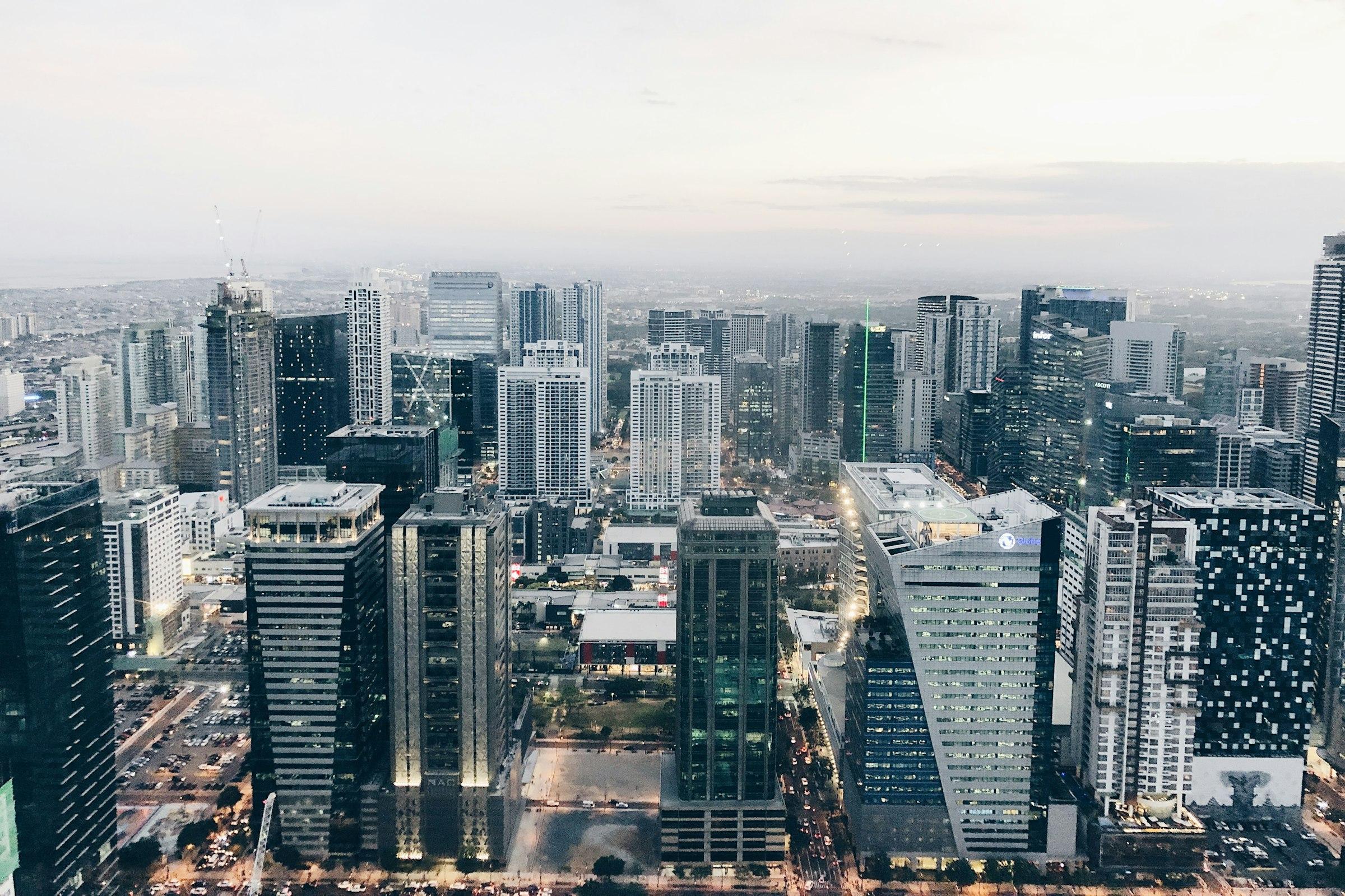
🇵🇭Manila for Digital Nomads
BGC, Philippines · Chaotic & cheap
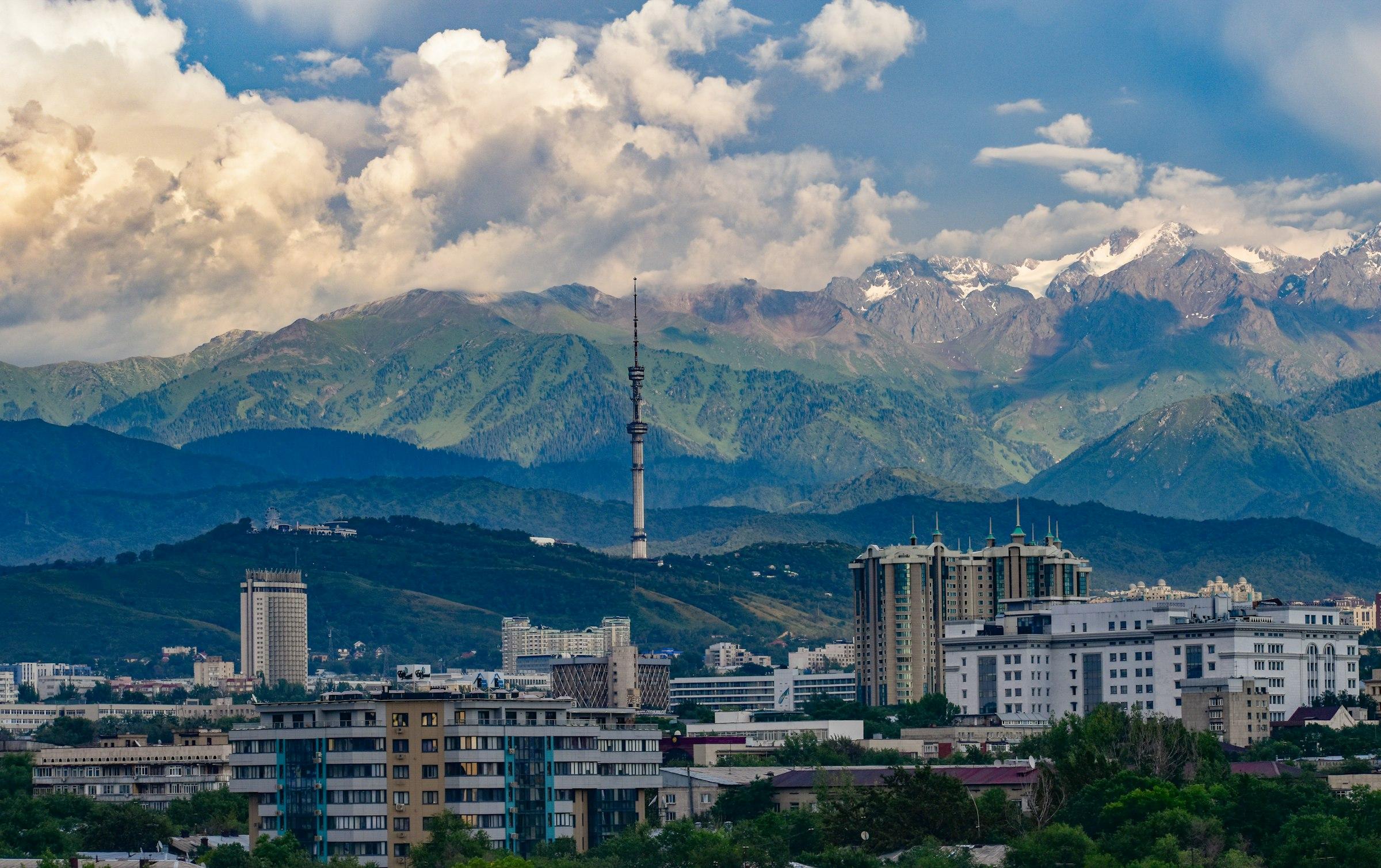
Photo: OJ Serrano / Unsplash
Costs
from €537/mo
Wifi
28Mbps
Mild months
0of 12
Safety
3.0
Overall
5.6
Manila at a glance
Manila works if you define Manila carefully: inside BGC and Makati — the planned business districts — you get walkable streets, serious gyms, malls as civic infrastructure and a life that runs entirely in English. The paperwork is unusually generous underneath a stingy headline: 30 visa-free days12 (source: Government sources — checked 2026-07-29) extend in-country again and again, up to 36 months12 (source: Government sources — checked 2026-07-29), and a dedicated nomad visa now exists beside that route12 (source: Government sources — Digital Nomad Visa, checked 2026-07-29).
The costs are climate and chaos. No month lands in the mild band2 (source: Nomadbase comfort index — from 2025 data), the year carries typhoon season, and the metro's traffic is the actual tax on everything — the districts function precisely because you stop leaving them. The measured internet runs at a 27.6 Mbps median download5 (source: M-Lab — median download speed), workable and unremarkable, with the towers' fibre beating the average.
It suits you if you want Asia with zero language friction, American-hours compatibility and an urban comfort bubble you rarely exit. It suits you less if the bubble bothers you on principle — the city beyond it is intense, unequal and not built for wandering.
What works
- English as the operating language — friction evaporates
- Tourist extensions up to 36 months12 (source: Government sources — checked 2026-07-29) plus a nomad visa12 (source: Government sources — checked 2026-07-29)
- BGC and Makati: walkable, safe, gym-dense modern districts
- National price level 35.7 (US = 100)9 (source: World Bank — household consumption price level)
Worth knowing
- Traffic that redefines distance: the districts are islands
- Only 30 visa-free days to start12 (source: Government sources — checked 2026-07-29) — the extension treadmill begins early
- No month in the mild band2 (source: Nomadbase comfort index — from 2025 data), plus typhoon season
- Tap water is not for drinking10 (source: Nomadbase country research — country tap-water tier)
Living in Manila
Neighbourhoods, finding a place and getting around — the practical layer the data tiles below cannot carry. Working, money, people and time off live in their own sections.
Where to stay
BGC is the bubble at its best: planned blocks, wide pavements, every convenience vertical. Makati — Salcedo and Legazpi villages — is the older money version with parks, weekend markets and marginally more soul. Poblacion is the counter-programming: dense, loud, creative, the nightlife quarter that gentrified into hostels and rooftop bars. Ortigas and Alabang serve specific commutes. Choose the district first, the tower second; crossing districts daily is a life choice you will regret.
Finding a place
Condo studios are the unit of the market, found through brokers, Lamudi and the building Facebook groups; furnished is standard and monthly terms are normal business. Supply is deep, so negotiate — vacancy is the landlord's problem here. Check the water pressure, the elevator-to-unit ratio and the generator policy; the building's management matters more than its lobby marble.
Getting around
Inside a district: walk. Between districts: Grab, timed around rush hours that stretch definitionally. The elevated trains work if their line happens to solve your problem; jeepneys are cultural heritage in motion and not a commuting plan. The practical answer is ruthless: arrange life to minimise crossings, and batch the ones you must make.
Cost of living
#25of 101 destinations
€537–€652/mo
a coliving room to a place of your own, plus everyday spending
What a month actually costs, as a range — housing you can verify, everyday spending modelled from national price levels, and every line labelled with which it is.
Money
Cards and GCash cover the districts; cash rules the street economy. ATMs cap withdrawals low with fees per pull, so plan around it. The price split is stark — mall-and-condo life costs real money while the local economy underneath runs cheap.
- Coliving room
- €241
- Food, groceries and eating outmodelled
- €182 – €257
- Local transportmodelled
- €11 – €16
- Leisuremodelled
- €85 – €121
- Mobile data
- €18
- Coworking deskadd-on, not in the range
- €78/mo8 (source: Published prices — Common Ground (from 3,800 PHP), Acceler8 Platinum (5,500 PHP) and KMC hot desk (5,500 PHP ex VAT) — median 5,500 PHP, checked 2026-08-05)
Spot prices: coliving room €241/mo8 (source: Published prices — MyTown Co-living, Delux private queen room near BGC (16,900 PHP plus 250 PHP club membership), private bathroom, aircon and kitchenette, checked 2026-08-05) · Big Mac €2.388 (source: Published prices — The Economist Big Mac Index, national average (169 PHP = 2.74 USD), July 2026 release — data CC BY 4.0) · rice 1 kg (market) €0.668 (source: Published prices — WFP Food Prices, rice (regular, milled), Metro Manila retail market (46.17 PHP/kg), June 2026 — data CC BY 4.0)
Work
#50of 103 destinations
28Mbps
median download, measured in the city
Connection, desks and whether a day here meets yours — the three things that decide whether you can do your job from this city.
Working from here
Coworking is abundant across BGC and Makati, cafés welcome laptops as a business model, and the condos' business lounges fill the gaps. Fibre in the towers is the real backbone — test the actual unit, not the brochure. Power interruptions are rare in the business districts and normal outside them, which is one more argument for the bubble.
Internet
Coliving & coworking
CoworkingClick the map to open it — 36 places mapped in Manila altogether.
- Coworking spaces mapped
- 214 (source: OpenStreetMap — within 15km)
- Cafés mapped
- 2,0684 (source: OpenStreetMap — within 15km)
Time zones
- Workday overlap with Europe
- 1 of 8 h1 (source: Copernicus ERA5 — Nomadbase overlap of a 09:00-17:00 day against Open-Meteo time zone (Asia/Manila), standard time; Europe reference UTC+1)
- 0 h8 h
- Workday overlap with US East
- 0 of 8 h1 (source: Copernicus ERA5 — Nomadbase overlap of a 09:00-17:00 day against Open-Meteo time zone (Asia/Manila), standard time; US East reference UTC-5)
- 0 h8 h
Overlap is the hours a 09:00–17:00 day here meets a 09:00–17:00 day there, at standard time.
Climate & air
#66of 103 destinations
0of 12
mild months — felt temperature between 18 and 27 °C
Month by month, not as one annual average. 18–27 °C is the range where being outside feels good — we count how much of the year sits inside it.
Seasons
Hot, hotter and wet: the dry months from December to April build to a furnace May, then the rains run June to November with typhoon season inside them. Rain means biblical afternoon dumps and the occasional named storm that shuts the city properly. The operating pattern: mornings for anything outdoors, air conditioning as default habitat, and a weather app with typhoon tracking during the season.
Tap a month for details.
feels-like monthly mean · ticks = rain days1 (source: Copernicus ERA5 — 2025 monthly means (felt temperature, rain-day share, cloud share))
comfortable & clearcomfortable, wetter/greyeroutside the 18–27 °C band
- Air quality — PM2.5, recent median
- 6 µg/m³ · fair3 (source: OpenAQ — median of 1 station, 2026-07-27)
- 0WHO 525+
- Dry days a year
- 160 days/year1 (source: Copernicus ERA5 — 2025 full-year count)
- Cloud cover, annual mean
- 76%1 (source: Copernicus ERA5 — 2025 annual average)
The climate score is built from that band plus rain and cloud cover, month by month — so a hot summer costs a destination points rather than earning them.
Safety & everyday life
#60of 103 destinations
6.1/ 10
women's safety — Georgetown WPS index, country level
Country-level indicators — a practical baseline for the whole country, not the vibe of one neighbourhood. Community reports refine this picture over time.
Staying safe
The business districts are genuinely safe at all hours — private security is ambient — and Poblacion's nightlife needs only standard drink-and-belongings care. The wider metro asks for real judgement: petty theft in crowds and transit, scam-flavoured friendliness around tourist zones, and districts that are not for exploring on vibes. Typhoon days are announced and taken seriously; follow the locals' lead, charge the power bank, and treat flooded streets as impassable because they are.
- Homicide rate, national
- 4.3 per 100k7 (source: UNODC — intentional homicide rate for Philippines, 2024)
- Safety for women
- 6.1 / 10
- 010
Georgetown WPS index — inclusion, justice and security, country level
- Getting by in English
- 8.1 / 10
- 010
very high English proficiency
LGBTQ+ legal position · Philippines10 (source: Nomadbase country research — checked 2026-07-29)
4.0 / 10- Same-sex relationshipsLegal
- Partnership recognitionNone
- Employment protectionsNo
- Legal gender changeNot possible
34 queer venues mapped in the city · ≈ 1.8 per 100k residents4 (source: OpenStreetMap — within 15km)
Socially visible scenes in Manila and Cebu contrast with a thin legal framework: the national SOGIE Equality Bill has been pending for over two decades (only patchwork local ordinances protect workers) and a 2007 Supreme Court ruling blocks gender marker change.
Tap water · Philippines10 (source: Nomadbase country research — checked 2026-07-29)
4.0 / 10Unsafe
Bottled advised
Mostly fine
Drink the tap
Bottled or filtered advised
Metro Manila and Cebu City supplies are usually OK but boiling is still advised; everywhere else drink bottled, and watch out for street-sold refilled bottles and block ice.
Getting there & staying
#44of 103 destinations
30 days
visa-free on an EU passport · set in Your setup
How you get in, how long you may stay, and what it takes to run a business from here.
Visa & entry requirements
Digital nomad visa
Digital Nomad Visa (DNV, EO 86)12 (source: Government sources — Dedicated remote-work visa: Digital Nomad Visa (DNV, EO 86) (checked 2026-07-29))
Thirty days visa-free for EU, US, UK, Canadian and Australian passports, and no country in Asia lets you extend a tourist stay further — up to 36 months in-country. The Digital Nomad Visa exists on paper since mid-2025, but its rollout is unfinished: no official country list, no official income figure.12 (source: Government sources — checked against the official source on July 29, 2026)
How long you can stay
- Around 157 nationalities — all EU/EEA states, US, UK, Canada, Australia included — get 30 days visa-free on arrival with an onward ticket. No fee, no pre-registration.
- The first extension adds 29 days (59 days total), then you keep extending in one- or two-month blocks at a Bureau of Immigration office or via its e-services portal. After 59 days you also pay for an ACR I-Card.
- Visa-exempt nationals can stretch this to a hard ceiling of 36 months without ever leaving. Visa-required nationals apply for a 9(a) visa at an embassy first and cap out at 24 months.
The Digital Nomad Visa — real, but half-built
⚠️ This is mid-rollout. Executive Order 86 (April 2025) created the DNV and the programme formally opened on 23 June 2025, but a year on the implementation is still patchy. Treat everything below as "confirm with your nearest Philippine embassy".
- One year, multiple entry, renewable once for a second year
- EO 86 requires "sufficient income" from foreign sources — the order names no figure and pegs it to no index. Immigration consultancies work with roughly US$24,000 a year as a benchmark; that number is not official.
- The catch: your country must offer a reciprocal digital nomad visa to Filipinos and host a Philippine Foreign Service Post. The DFA had still not published the qualifying-country list as of mid-2026, so eligibility is decided post by post.
- Applications run through evisa.gov.ph followed by an embassy appointment to verify originals; processing reports range from two to six weeks.
- You also need health insurance for the full stay, a clean criminal record, and you may not take local employment or run a Philippine business. The visa is built around income earned — and taxed — abroad.
- Practical read: with a 36-month tourist runway, most remote workers simply extend; the DNV only wins once the country list and income rules are published.
Visa rules change frequently. This information was last checked on July 29, 2026. It is not legal advice — confirm before booking with the official source.
Flights
The nearest major airport — Ninoy Aquino International Airport — is 6 km6 (source: OurAirports — nearest major airport is Ninoy Aquino International Airport) out, with 3 airports6 (source: OurAirports — major and regional airports with scheduled service) within 100 km overall.
Company & banking
- Setting up a company
- 2.5 / 10
- 010
partly remote · foreign ownership restricted · capital from EUR 185,000 · ~21 days to register
- Opening an account
- 5.3 / 10
- 010
personal account difficult · business account straightforward · branch visit needed · limited EMI cover
Setting up, in practice
The filing is online through SEC eSPARC, and that is not the constraint. A foreign-owned company selling to the domestic market needs US$200,000 of paid-in capital under the Foreign Investments Act (RA 11647) — US$100,000 with advanced technology or 50+ direct employees. Export-oriented companies (60%+ of output) escape the threshold entirely, which is the route most remote-service businesses actually take.Banking, in practice
Company accounts follow registration. Personal accounts for non-residents are branch-dependent and usually want a visa; cash and GCash still carry a lot of daily life.Not legal or tax advice. Company law, fees and bank policy change without notice — confirm with the registry linked on each figure and with a local adviser before you act on any of it.
Going out
#95of 103 destinations
8.9/ 100
bars, pubs and clubs per 100 restaurants & cafés
Evenings, eating and what there is to do once the laptop closes.
Time off
The airport's domestic web is the entire point: an hour's flight fans out to Palawan, Cebu, Bohol and Siargao — some of the best island time anywhere. Nearer, Tagaytay's volcano views and Batangas' dive resorts make road weekends. International hops to Taipei, Hong Kong and Singapore round out the menu.
CafésClick the map to open it — 36 places mapped in Manila altogether.
- Restaurants
- 5,1944 (source: OpenStreetMap — within 15km)
- mapped within 15 km — the base the shares below are measured against
Being active
#17of 103 destinations
301spots
gyms and yoga studios mapped in town
Gyms, studios and board sports in town, and the nature within reach — counted where counting is honest, shown as a badge where the map is too sparse to rank.
Staying active
The districts are built for it: BGC's gym density is startling, the running community owns the high street at dawn and closes it entirely on weekend mornings, and boutique studios cover every discipline. Beyond the bubble, the boxing gyms are world-class and welcoming — this is a boxing nation — and trail country at Rizal's edges rewards the early Grab out.
In town
GymsYogaClick the map to open it — 36 places mapped in Manila altogether.
Nature within reach
Community
Who is here, who is coming, and who has been. Counts only — never names.
Meeting people
English removes the barrier and Filipino warmth removes the awkwardness — this is one of the easiest social entries in Asia. The scene organises through gyms, run clubs, Poblacion's bar circuit and a large returning-Filipino professional crowd that bridges local and international life. Say yes to the videoke invitation; resistance is cultural error.
here now
arriving soon
have been
Nobody from the community has checked into Manila yet. If you are here, you would be the first.
Places like Manila
The closest matches in the catalogue, measured across cost, climate, connection and safety — with the reason each one is here. Compare any of them against this page in one click.
How the scores work
Every score runs 0–10 and is comparative — where Manila lands across the catalogue, not a grade in isolation.
Cost
7.5#25 of 101 · 1 of 1 measured
What a month costs, from the cheapest way of living here to the dearest we can price.
A month runs €537–€652 and everyday spending is modelled from national price levels. Across the catalogue that ranks 25th of 101.
Public data 7.5
Work
5.2#50 of 103 · 2 of 2 measured
Connection, desks and whether the working day here meets yours.
Typical downloads run around 28 Mbps and 21 coworking spaces are mapped in town. Across the catalogue that ranks 50th of 103.
Public data 3.0
Public data 7.4
Climate
5.9#66 of 103 · 1 of 1 measured
How the year feels outside, air quality included.
0 of the 12 months sit in the comfortable 18–27 °C range and the air is clean (6.0 µg/m³ PM2.5). Across the catalogue that ranks 66th of 103.
Public data 5.9
Safety
5.4#60 of 103 · 6 of 6 measured
The country-level baseline: violence, healthcare, water, and who the law protects.
Violent crime is low nationwide (4.31 homicides per 100k), women's safety scores 6.1/10 on the Georgetown index, 795 clinics and hospitals are mapped within reach and tap water is not drinkable. Across the catalogue that ranks 60th of 103.
Public data 3.0
Public data 8.5
Public data 6.1
Public data 4.0
Public data 4.0
Public data 8.1
Getting there
6.3#44 of 103 · 3 of 3 measured
Getting in, staying legally, and flying out again.
An EU passport gets 30 visa-free days, there is a dedicated nomad visa and the nearest major airport is 6 km from town. Across the catalogue that ranks 44th of 103.
Public data 5.3
Public data 8.8
Public data 3.9
Going out
2.4#95 of 103 · 4 of 4 measured
Evenings, eating and what there is to do when the laptop closes.
For every 100 restaurants and cafés there are 9 bars, pubs or clubs and 1 vegan-friendly places per 100 restaurants and cafés. Across the catalogue that ranks 95th of 103.
Public data 2.4
Public data 3.9
Public data 1.1
Public data 0.5
Being active
6.9#17 of 103 · 2 of 2 measured
Gyms and studios, board sports, and the nature within reach.
290 gyms and 11 yoga studios are mapped in town, 8 nature reserves and 2 hiking routes lie within 30 km and it sits on the coast. Across the catalogue that ranks 17th of 103.
Public data 7.3
Public data 6.5
Community
Nothing measured here yet
Members on the ground, chapters and events — our own data, not a proxy.
Not measured here yet: community.
Read the sectionSources
Every figure on this page carries the source it came from and the date it was measured. Where no source exists, the field is left empty rather than estimated.
- 1
Copernicus ERA5Generated using Copernicus Climate Change Service information
ECMWF’s ERA5 reanalysis, retrieved through Open-Meteo. Temperatures, rainfall, cloud cover and wind are daily values for the last complete calendar year.
- 2
Our own reading of ERA5 data, not a measurement: a month-by-month score for how comfortable the felt temperature is, damped for rain and cloud. The formula is published.
- 3
OpenAQCC BY 4.0
Air quality measured at ground stations. Only reaches part of the catalogue — a city needs a station nearby that is still reporting.
- 4
OpenStreetMapODbL
Community-mapped places: coworking, cafés, gyms and diet options within 15km. Counts are a floor rather than a census — coverage depends on local mappers.
- 5
M-LabCC BY-SA 4.0
Internet speed from real speed tests run by people in the city, aggregated over a seven-day window.
- 6
OurAirportsPublic domain
Airport locations and types. Distances are to the nearest major airport with scheduled service.
- 7
UNODCFree with attribution
Intentional homicide rate from the UN Office on Drugs and Crime — a national figure, because no free source measures crime per city. The year next to the number is the year the country last reported.
- 8
Prices read by hand from the operator’s or authority’s own published price list — a transit tariff, a coworking rate card, an eSIM store — on the date shown. Checked quarterly; the linked page is the source.
- 9
World BankCC BY 4.0
Price level of household consumption at market exchange rates (US = 100) — a national figure that anchors the cost score where no city-level source exists yet. It measures what arriving with foreign income feels like, which is why a weak currency lowers it.
- 10
Hand-maintained country tables for the LGBTQ+ legal position and tap-water safety, compiled from advocacy databases (ILGA World, Human Dignity Trust), national authorities and government travel advice, and scored with a published rubric. Country-level by nature — city reality can differ, which is what the practical note is for.
- 11
WikidataCC0
Structural facts taken from the place’s Wikidata entity — resident population, which mirrors a national census figure, and elevation above sea level. The year is the one Wikidata records for that figure; where the entity was the wrong scale for the place we describe, the number has been replaced by a hand-sourced one from the statistics office instead.
- 12
Government sources
Visa and entry rules come from the responsible authority for each country, linked in the visa section and re-checked by hand on the date shown.
Frequently asked questions
How much does it cost to live in Manila per month?
Between €537 and €652 a month, housing and everyday spending together. Housing is a coliving room at €241. Everyday spending — food, local transport, leisure — is modelled from national price levels rather than measured in the city, so it is an indication and not a quote. A coworking desk is extra at €78. Every figure carries its source on the destination page.
How fast is the internet in Manila?
Median download speed is about 27.6 Mbps. Source: M-Lab median of 523,116 tests within 50 km, last 7 days.
What visa do I need for Manila?
Thirty days visa-free for EU, US, UK, Canadian and Australian passports, and no country in Asia lets you extend a tourist stay further — up to 36 months in-country. The Digital Nomad Visa exists on paper since mid-2025, but its rollout is unfinished: no official country list, no official income figure. Last checked 2026-07-29. Always confirm with the official source before booking.
What is the weather like in Manila?
Winters average 26.9 °C and summers 28 °C. 0 of 12 months average a comfortable 18–27 °C (felt temperature). Source: Copernicus ERA5, 2025 annual average.
Can I work European or US hours from Manila?
A 09:00–17:00 working day in Manila overlaps 1 hours with Central European time and 0 hours with US Eastern time, at standard time.
Are there coworking spaces in Manila?
21 coworking spaces are mapped in Manila, plus 2068 cafés to work from. Source: OpenStreetMap, within 15km. Counts are a floor, not a census — coverage depends on local mappers.
How do you get to Manila?
The nearest major airport is about 6 km away. 3 airports with scheduled service within 100 km. Source: OurAirports — nearest major airport is Ninoy Aquino International Airport.
Where Manila ranks
Last reviewed August 5, 2026. Every figure carries its own measurement date; hover a footnote for the source, or see the list above.